

Add location evidence
Map signals to chainage, valve stations and priority sections.
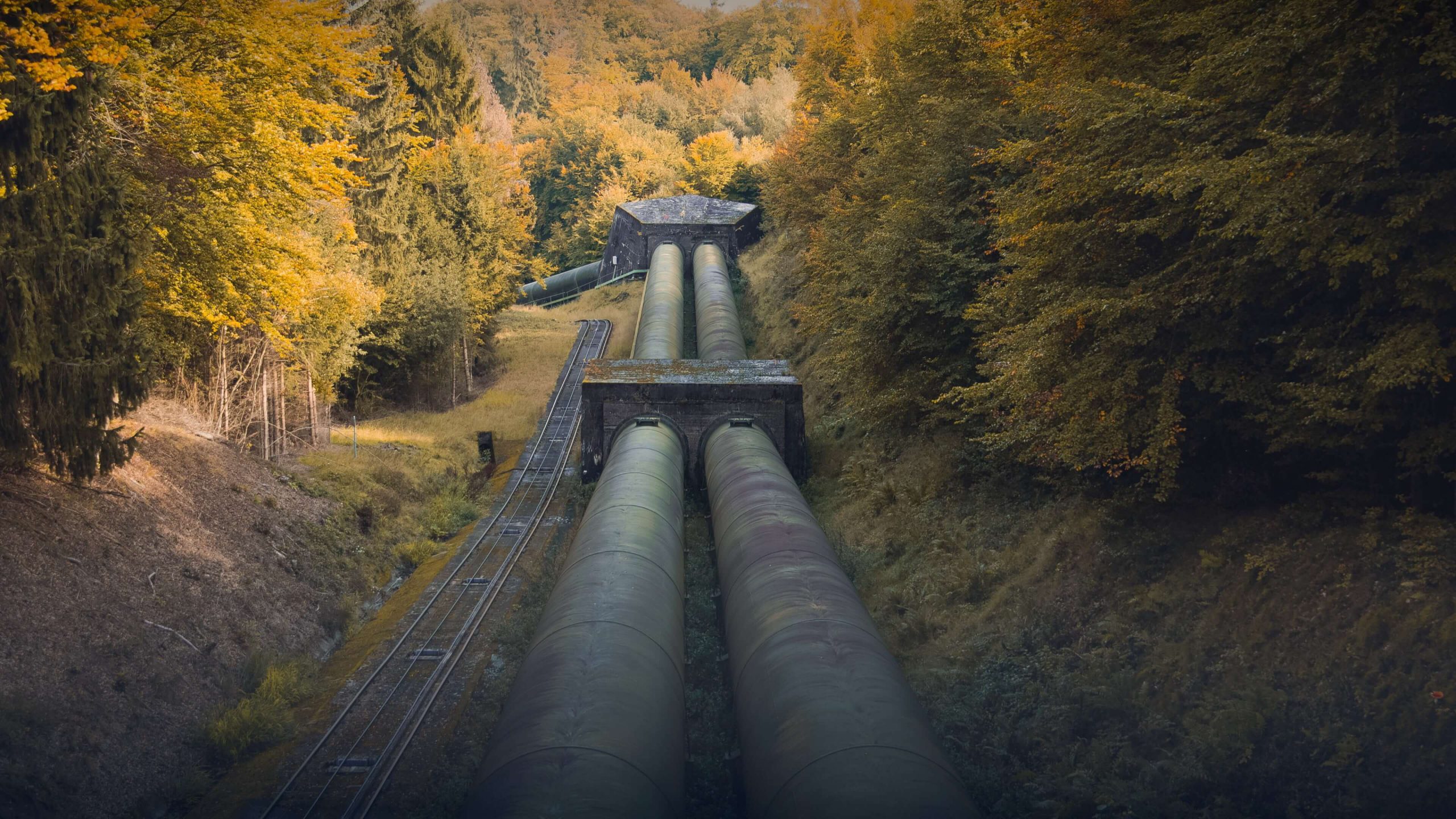
OIL & GAS / PHYSICAL AI
Connect distributed sensing, physical AI and operational context across gathering and transmission pipelines to investigate interference, leak-related signals and changes along the route.
01 / ROUTE INSIGHT
Pressure and flow describe operating conditions; fiber adds spatial context. From gathering networks to long-distance transmission, connect disturbances with pipeline locations and operating conditions to focus investigation.
Map signals to chainage, valve stations and priority sections.
Review construction activity, persistent noise and moving signatures against an operational baseline.
Correlate inspections, pressure, flow and field records to support human decisions.
02 / APPLICATIONS
Choose observations around specific risks and interpret each signal in its field context.
OX-Sense original scene concepts · Optical paths, equipment, cutaways and anomaly effects are illustrative.
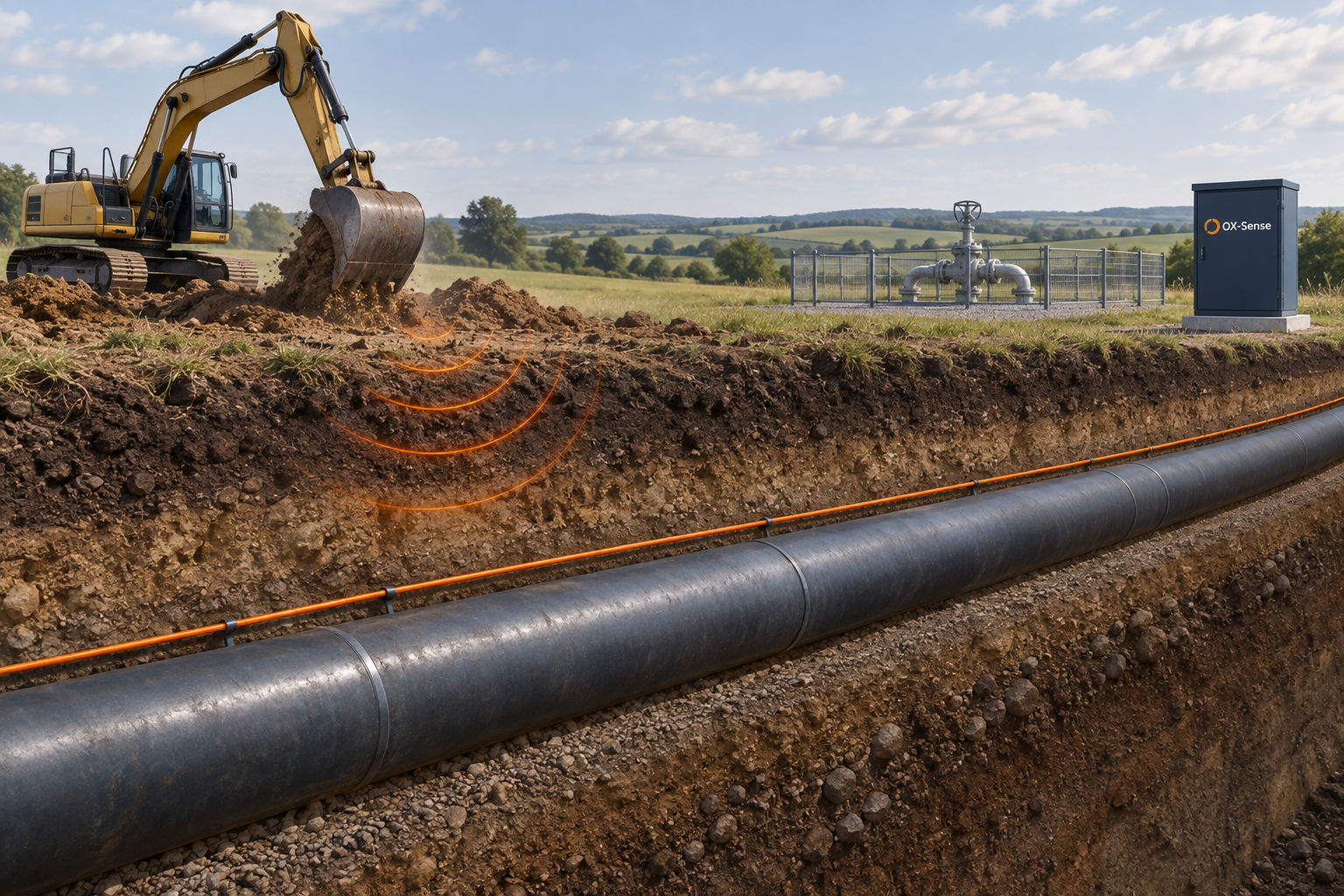
Analyse spatial and temporal signatures of excavation, drilling, piling and vehicles to distinguish sustained activity from background disturbances and locate areas for investigation.
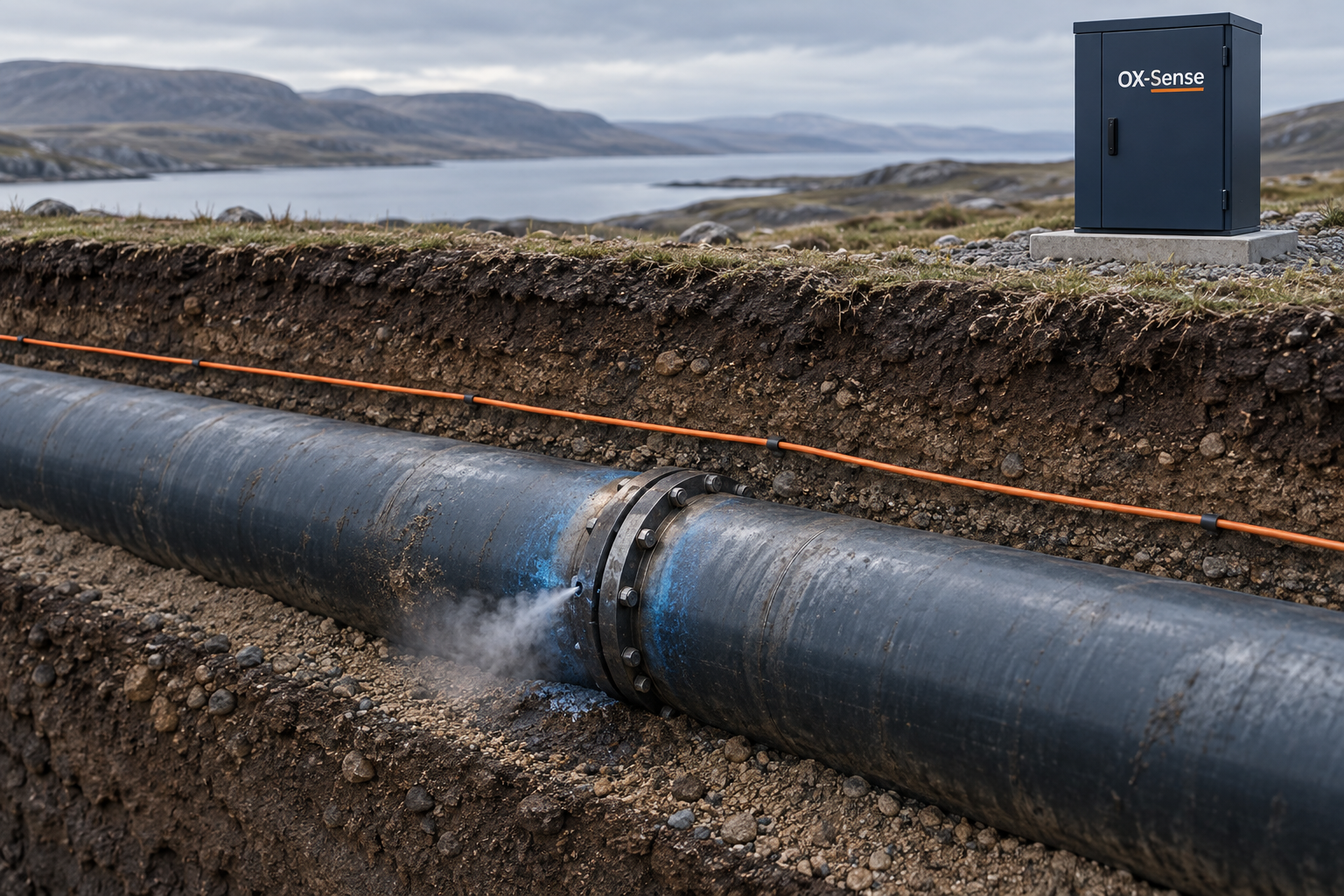
Pressurised leaks can produce noise, vibration and local temperature changes. Assess DAS or DTS against fluid and site conditions, and cross-check observations with pressure and flow.
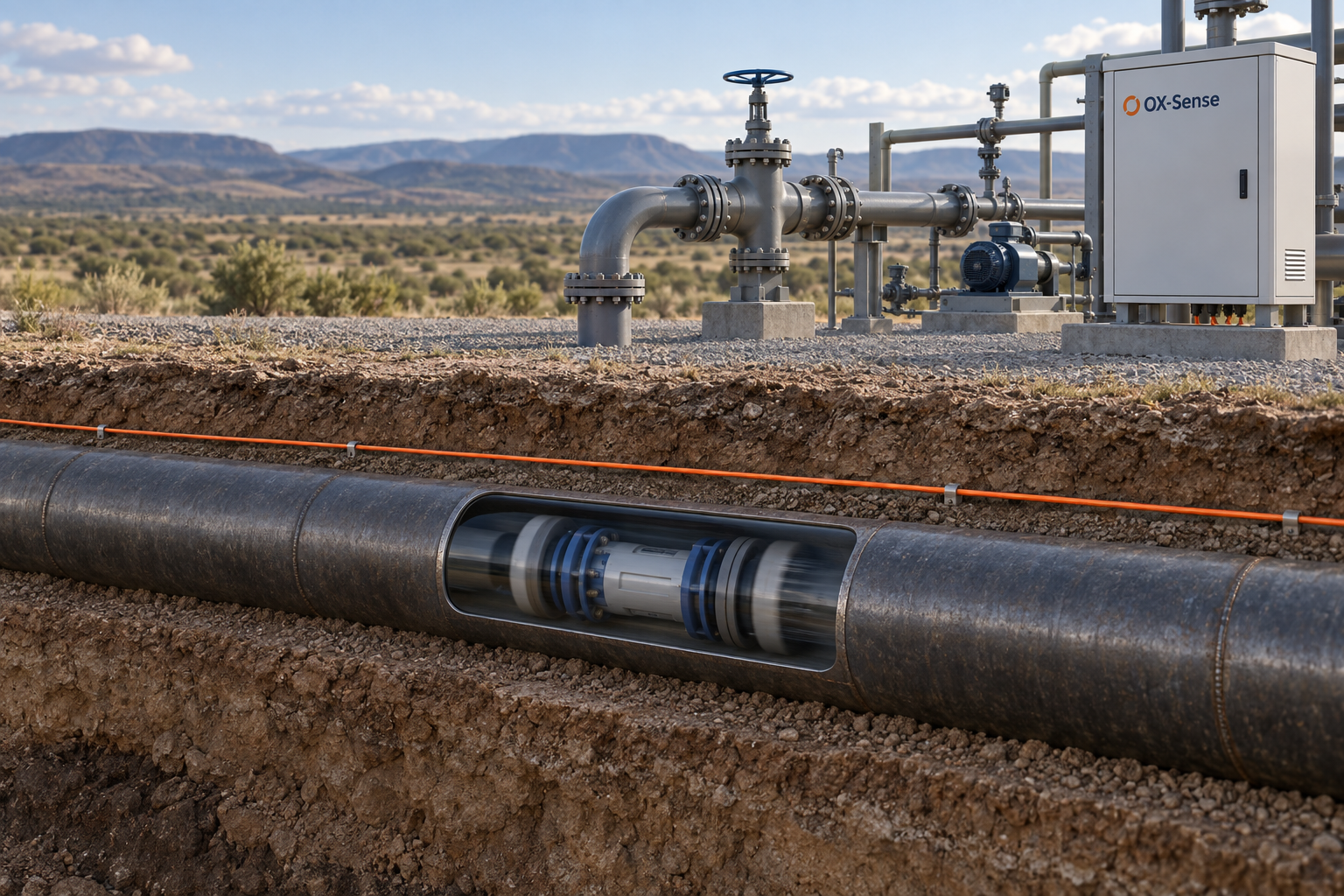
Track moving signatures associated with pig passage and record pump starts, valve actions and flow changes. Understand normal operation before investigating departures from it.
Leak detectability depends on fluid, pressure differential, leak size, background noise and fiber coupling, and requires field evaluation.
03 / SENSING & PHYSICAL AI
Fiber runs alongside the pipeline, outside the pipe. Disturbances couple through soil and cable into observed signals. Propagation principles, installation conditions and engineering constraints inform model development.
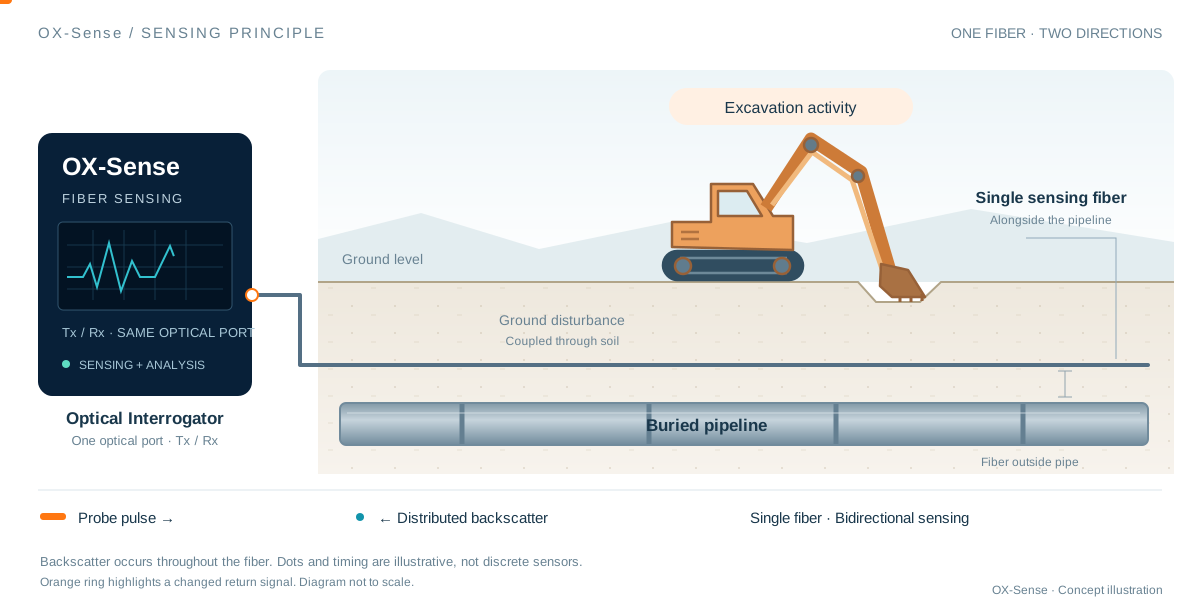
Assess fiber and coupling to define sensing modalities and equipment connections.
Analyse frequency, duration, spatial extent and movement.
Correlate starts, stops, pigging and field activity to produce traceable evidence.
04 / CORRELATED EVIDENCE
Fiber observations complement existing pipeline monitoring. Connect location, operating conditions and field feedback across data, models and the platform.
DAS observes vibration, DTS temperature and suitable strain sensing deformation; each requires appropriate equipment and installation.
Correlate chainage, crossings, pressure, flow and work records to distinguish normal operations from anomalies.
Assess GIS, SCADA or work-order integration and feed investigation results into model validation.
05 / FIELD VALIDATION
Understand target events, fluid and pressure, fiber separation and soil conditions before defining a pilot and acceptance criteria.
Assess trench layout, separation, sheath and soil coupling to determine whether target signals are observable.
For settlement, landslide or scour-prone sections, assess strain sensing alongside other observations.
Record production and background activity; use controlled trials to evaluate recognition, location, false alarms and response workflows.
OX-SENSE / FEEL THE WORLD
Discuss fluids, operations, fiber availability and priority risks to define a validation pathway.
Discuss pipeline monitoring