

Close to the asset
Assess available fibers within subsea cables or alongside pipelines, focusing on priority routes and landfalls.
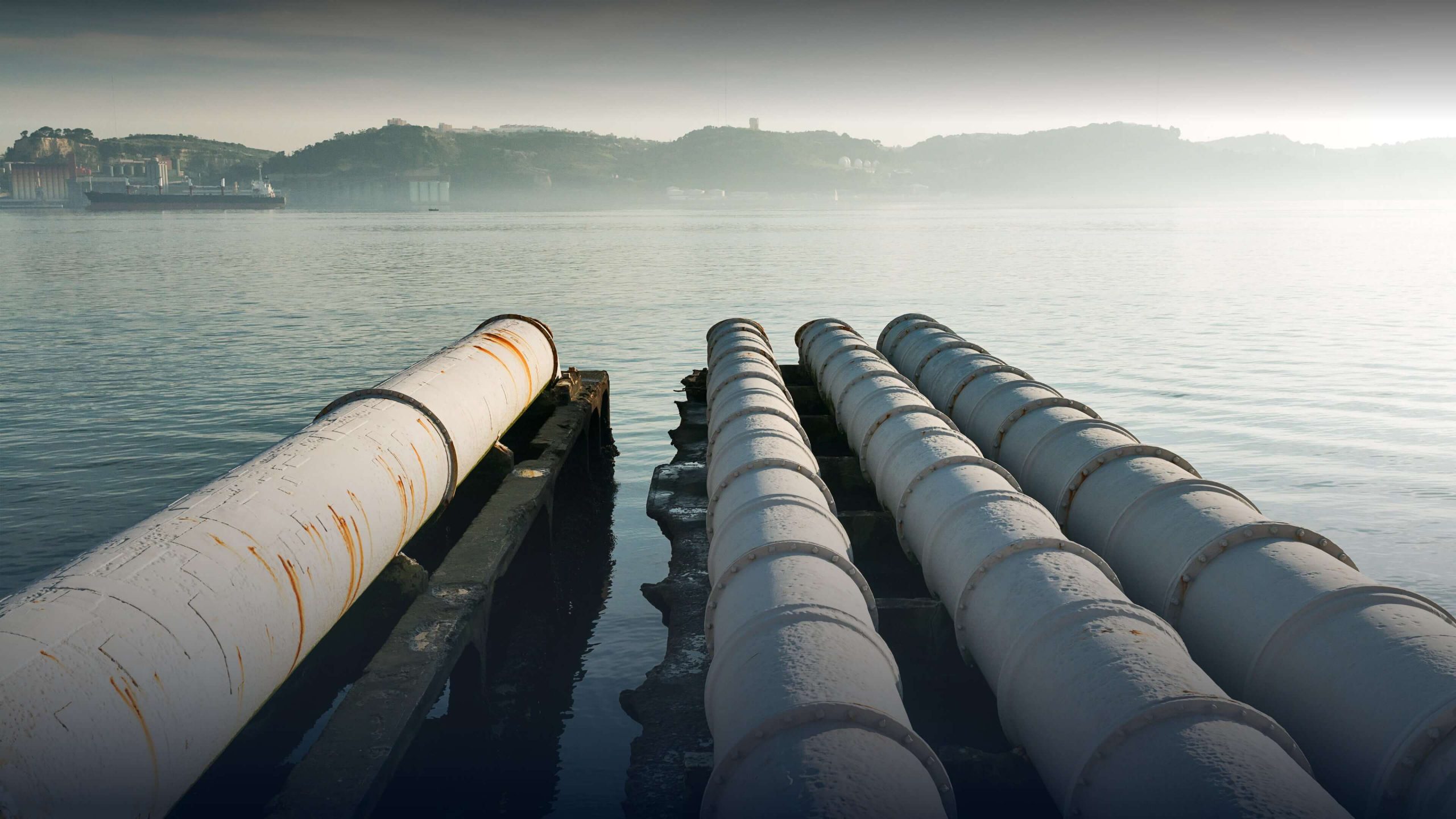
SUBSEA / PHYSICAL AI
Connect route-side fiber, physical AI and maritime context to build continuous observation of subsea telecom cables, power cables and pipelines.
01 / BELOW THE SURFACE
Alongside surface vessel tracks and periodic inspections, fiber can add underwater acoustic and vibration observations. Interpret passage, contact and environmental change in the context of asset location and sea conditions.
Assess available fibers within subsea cables or alongside pipelines, focusing on priority routes and landfalls.
Build a baseline of tides, waves, routine vessel traffic and maintenance to identify changes worth reviewing.
Correlate fiber distance, asset routes and field records to focus investigation in space and time.
02 / APPLICATIONS
Build interpretable observations and review pathways around activity, contact and environmental change.
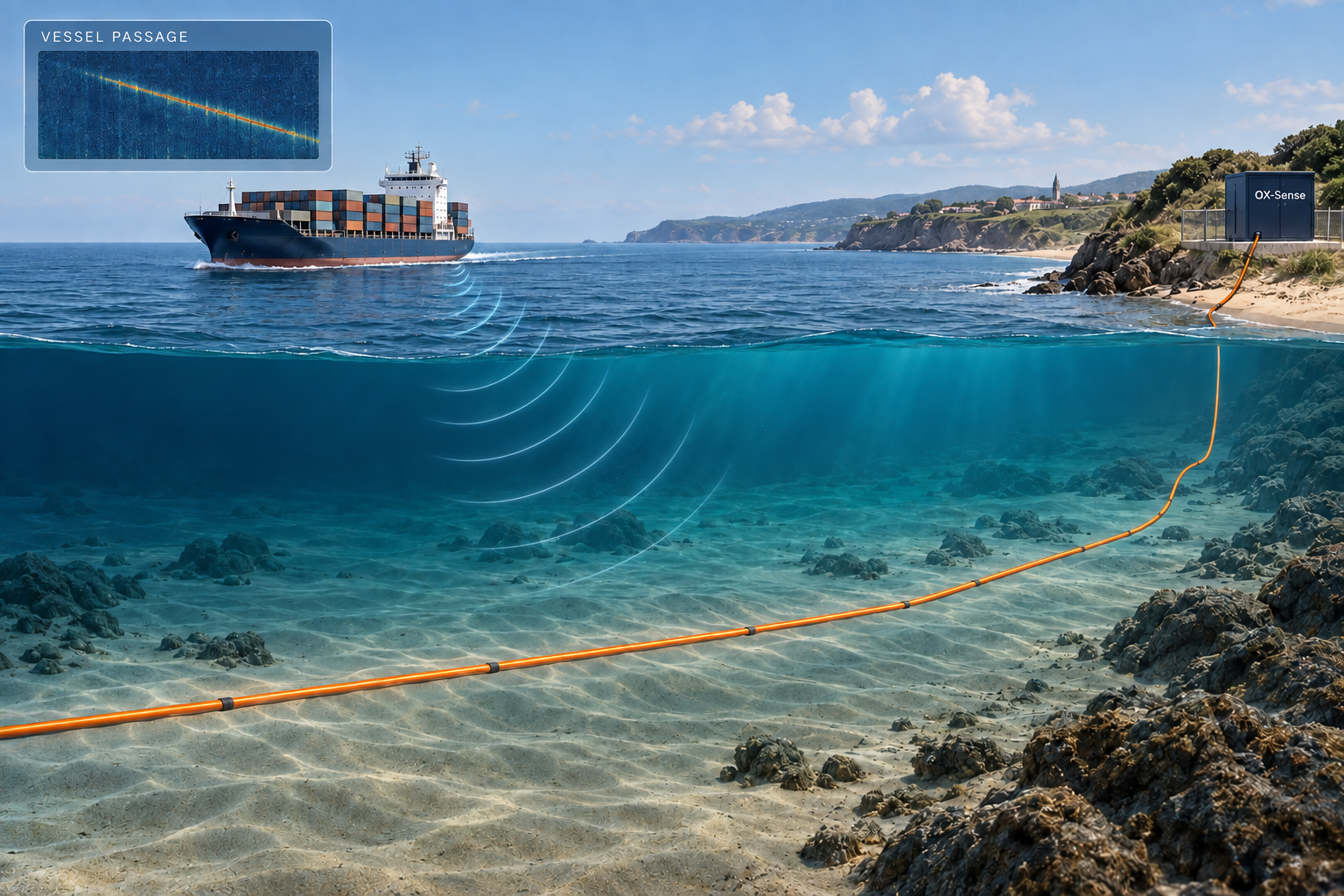
Study spatial and temporal vessel signatures and correlate them with AIS tracks, shipping lanes and work records. Fiber supplies physical evidence; identity and activity require corroboration.
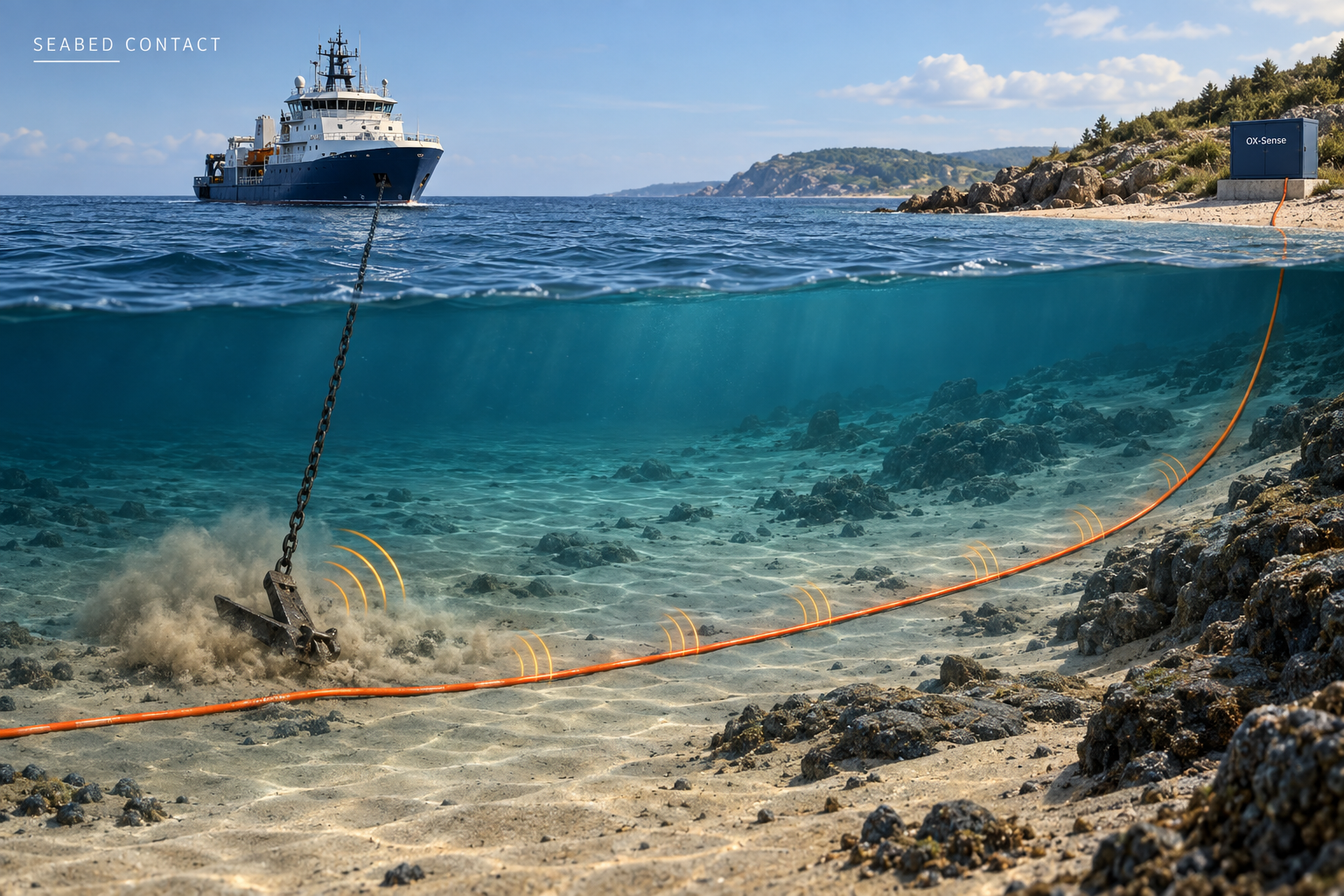
Observe local impacts, sustained vibration and moving signatures associated with anchors, fishing gear and seabed work. Use sea conditions, maintenance plans and inspections to prioritise review.
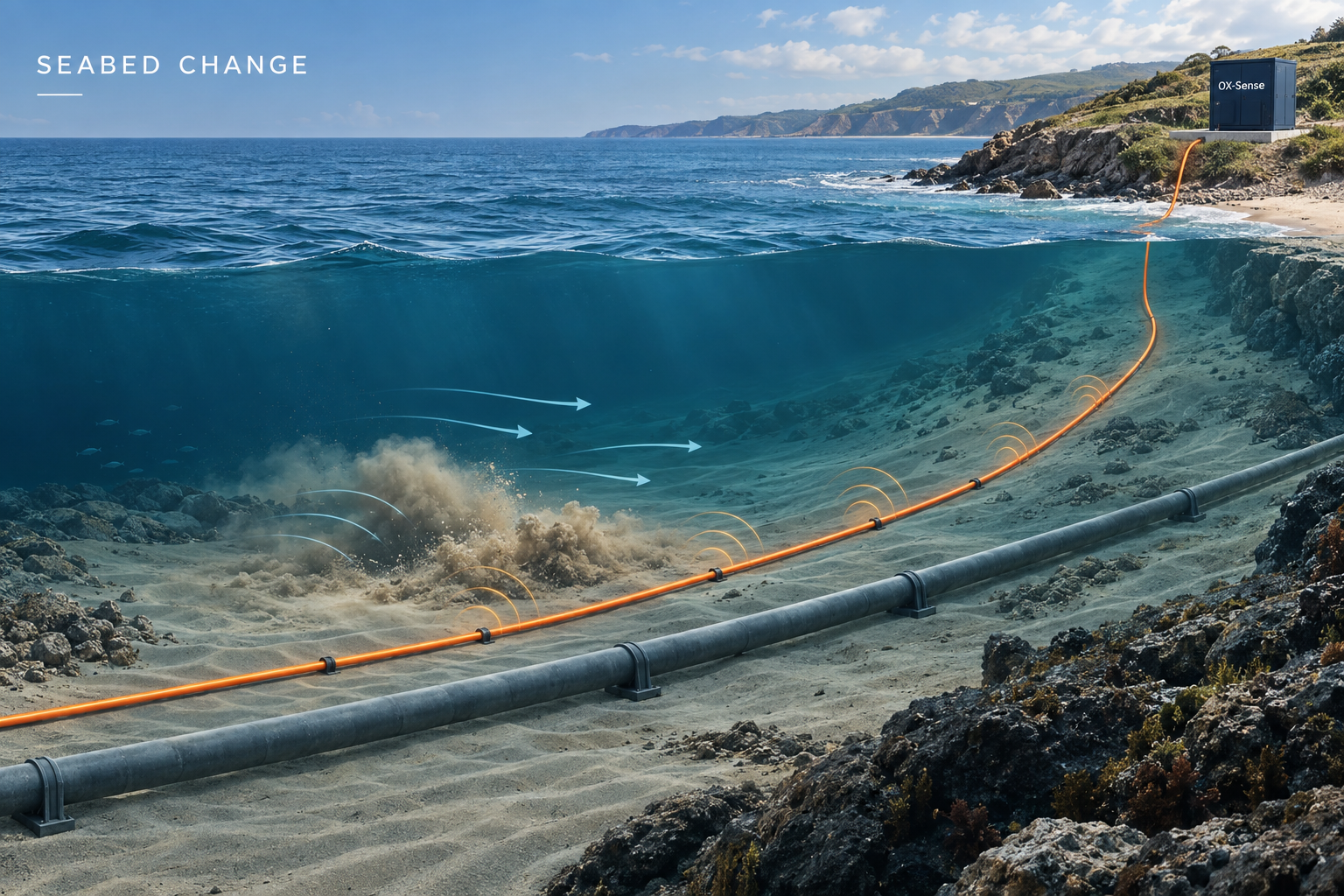
Observe response changes associated with currents, waves and seabed disturbance. For scour, free spans, deformation or leaks, assess suitable sensing modalities and coupling alongside specialist inspections.
OX-Sense scene concepts · Waveforms, acoustic arcs and cable highlights are illustrative, not measured data or active sound emission. Burial, routing and shore access follow engineering design. DAS, DTS and strain monitoring require appropriate equipment and conditions.
03 / SENSING & PHYSICAL AI
With DAS, a shore-based interrogator reads changes in backscatter within the same fiber to observe dynamic strain along the route. Optical physics, propagation and engineering constraints inform model development for complex marine conditions.
Assess fiber access, optical continuity and repeater constraints to define observable sections.
Use water and seabed propagation, cable directionality and coupling to interpret spatial and temporal features.
Map event signatures to asset routes and corroborate them with maritime context and field feedback.
04 / CORRELATED EVIDENCE
Connect observations and operations through shared location and time, supporting human review, inspection planning and traceability.
Assess available AIS, sea-state, coastal radar and work-plan data to understand activity context.
Prioritise review by evidence and asset criticality, with ROV surveys or specialist inspections where appropriate.
Record investigation outcomes and environmental changes to improve datasets, model validation and monitoring workflows.
05 / FIELD VALIDATION
Select representative sections and evaluate detectability, localisation and response workflows against asset, fiber and marine conditions.
Review cable or pipeline routes, burial state, available fibers, attenuation and access permissions.
Sample varied sea conditions and routine operations; assess sheath, burial, sediment and directional effects.
Use safe, authorised cooperative trials or existing event records to assess missed detections, false alarms, localisation and review workflows.
OX-SENSE / FEEL THE WORLD
Discuss asset types, sea conditions, fiber resources and priority risks to define a validation pathway.
Discuss subsea monitoring