

Sense change
Select the sensing modality for vibration, temperature or strain according to the monitoring objective.
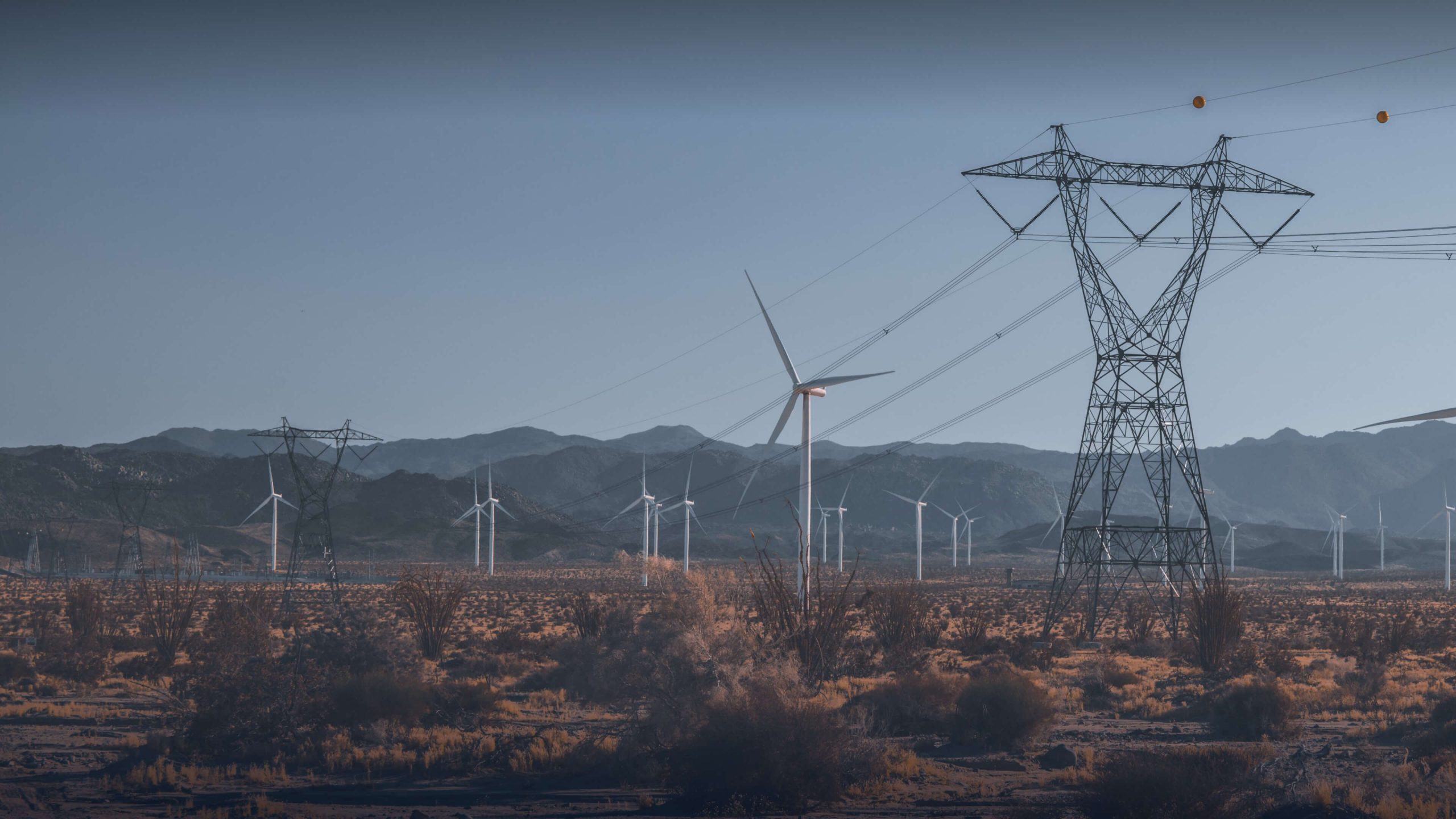
POWER LINES / PHYSICAL AI
Connect distributed sensing, physical knowledge and AI analysis across overhead lines and power cables to support event location, field investigation and operational decisions.
01 / ROUTE AWARENESS
Long routes leave gaps between inspections. Fiber offers a spatially distributed observation pathway, adding location, timing and field context to complement inspections and electrical monitoring.
Select the sensing modality for vibration, temperature or strain according to the monitoring objective.
Interpret anomalies using signal features, installation conditions and physical knowledge.
Give operators locations and traceable evidence for investigation and response.
02 / APPLICATIONS
From overhead routes to underground and subsea cables, match sensing methods to asset risks and fiber conditions.
OX-Sense scene concepts · Optical paths, equipment and hazards are illustrative.
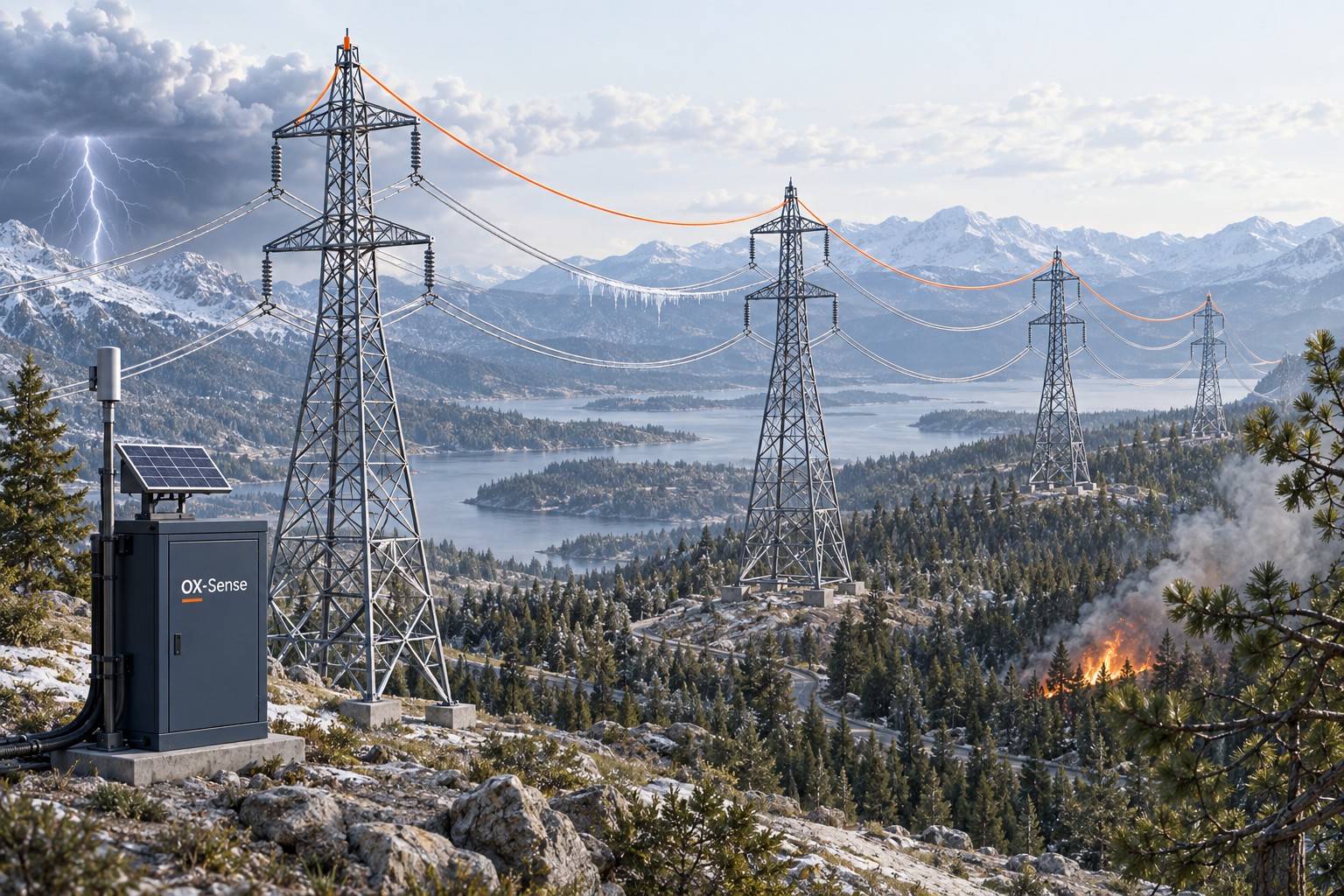
Assess OPGW fiber and coupling for observations related to icing, galloping, lightning and external disturbances.
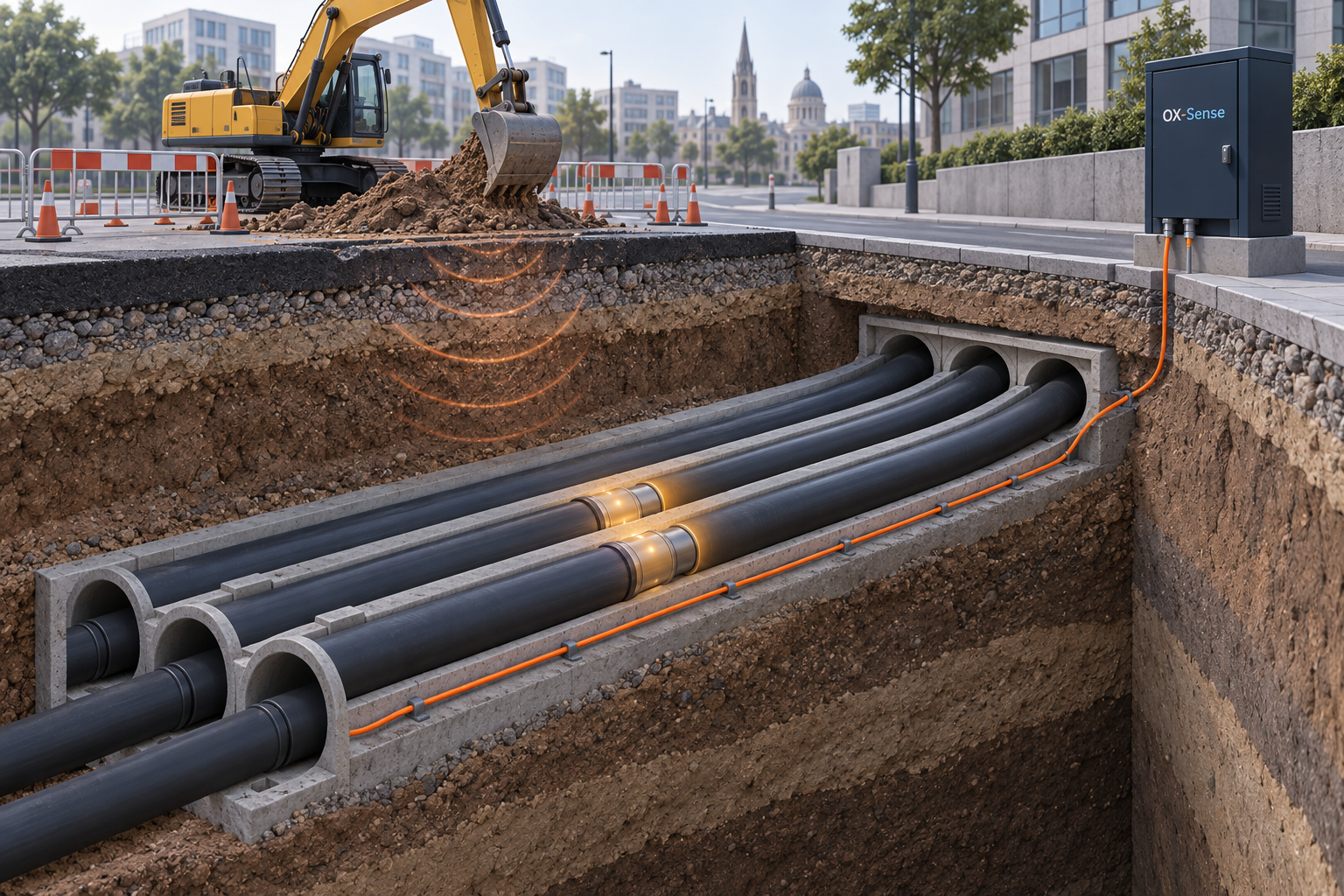
Use DAS for excavation and drilling vibrations; evaluate DTS for temperature rises and hotspots to inform corridor protection and thermal analysis.
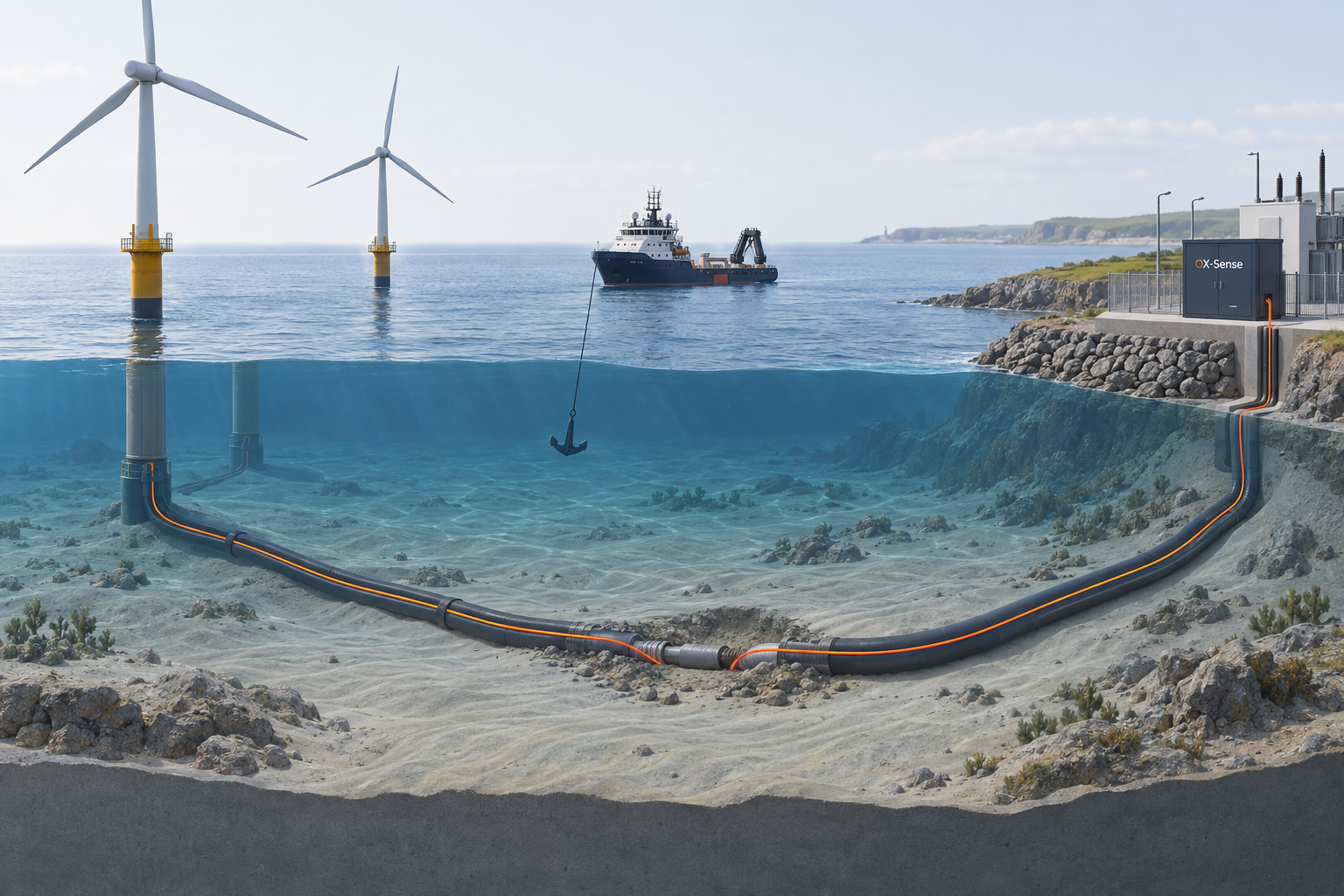
Evaluate multiple sensing parameters for external activity, temperature and strain, using integrated or adjacent fiber and route context.
DAS, DTS and strain sensing measure different quantities and require appropriate equipment. Multi-parameter operation and event recognition depend on installation and validation.
03 / SENSING & UNDERSTANDING
Sensing is the starting point. OX-Sense incorporates optical mechanisms, propagation principles and engineering constraints into model development to connect field signals with event analysis.
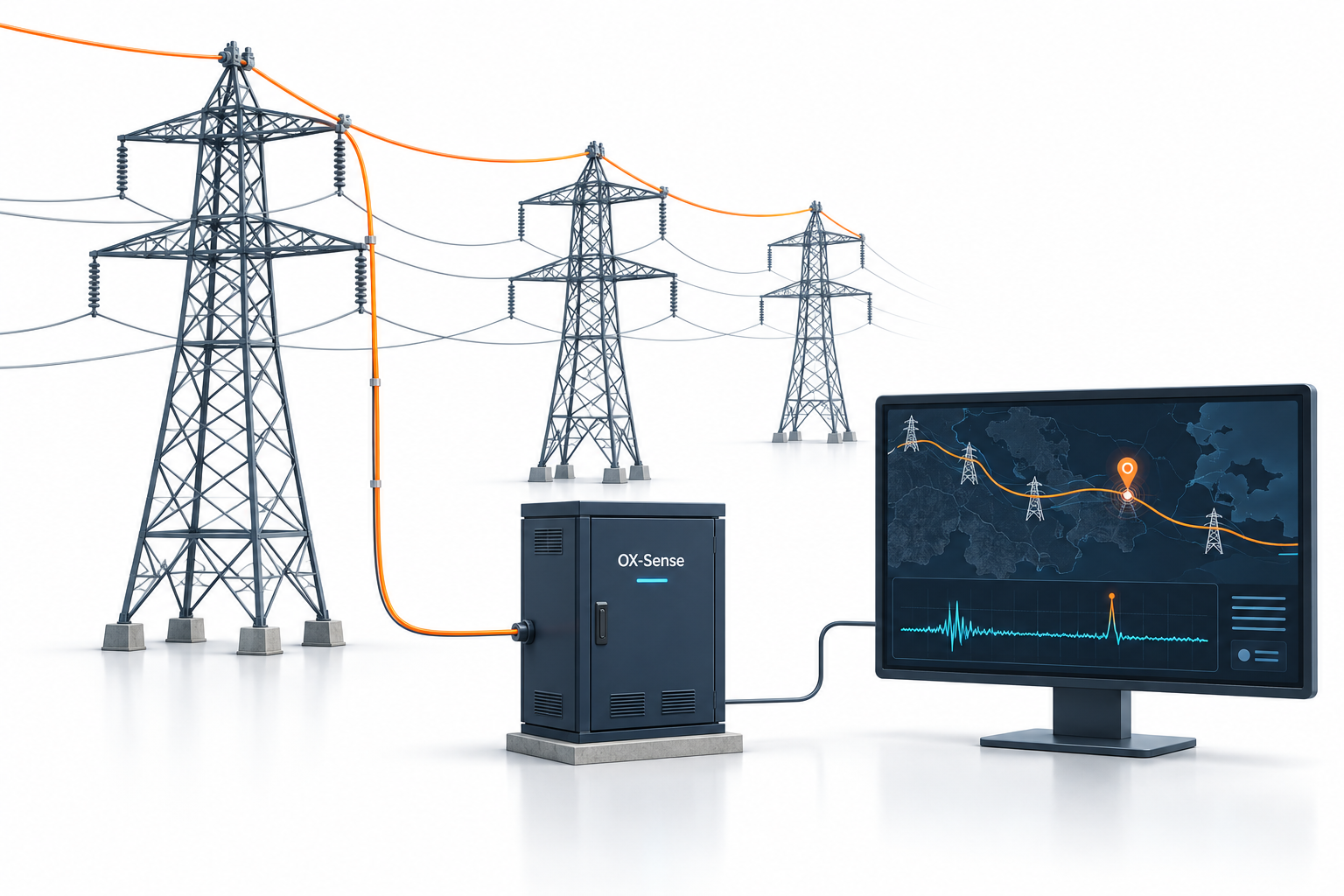
Assess fiber cores, loss, installation and coupling to define equipment locations.
Extract spatial, temporal and frequency features and establish a site baseline.
Combine physical knowledge and field samples to study classification and interference.
Link route sections, timestamps and signal records for operator review.
04 / OPERATIONS
Give alerts evidence and capture feedback from the field. Organise route locations, signal history and investigation results into a growing operational knowledge base.
Associate anomalies with route sections, towers or cable corridors to focus investigation.
Review signals before and after events alongside operational context to inform priorities.
Assess integration with GIS, SCADA or work orders and feed investigation records into data and model development.
05 / FIELD DEPLOYMENT
Pilot around a specific operational problem; use field validation to determine applicability and expansion.
Identify asset type, target events and existing operational workflows.
Check fiber availability, location, loss and coupling to target signals.
Evaluate against known events, seasonal conditions and load changes before scaling.
OX-SENSE / FEEL THE WORLD
Start with your route conditions and monitoring goals to define a suitable field trial.
Discuss grid monitoring