

Observe the boundary
Choose installation for the fence, wall and terrain, mapping the sensing route to security zones.
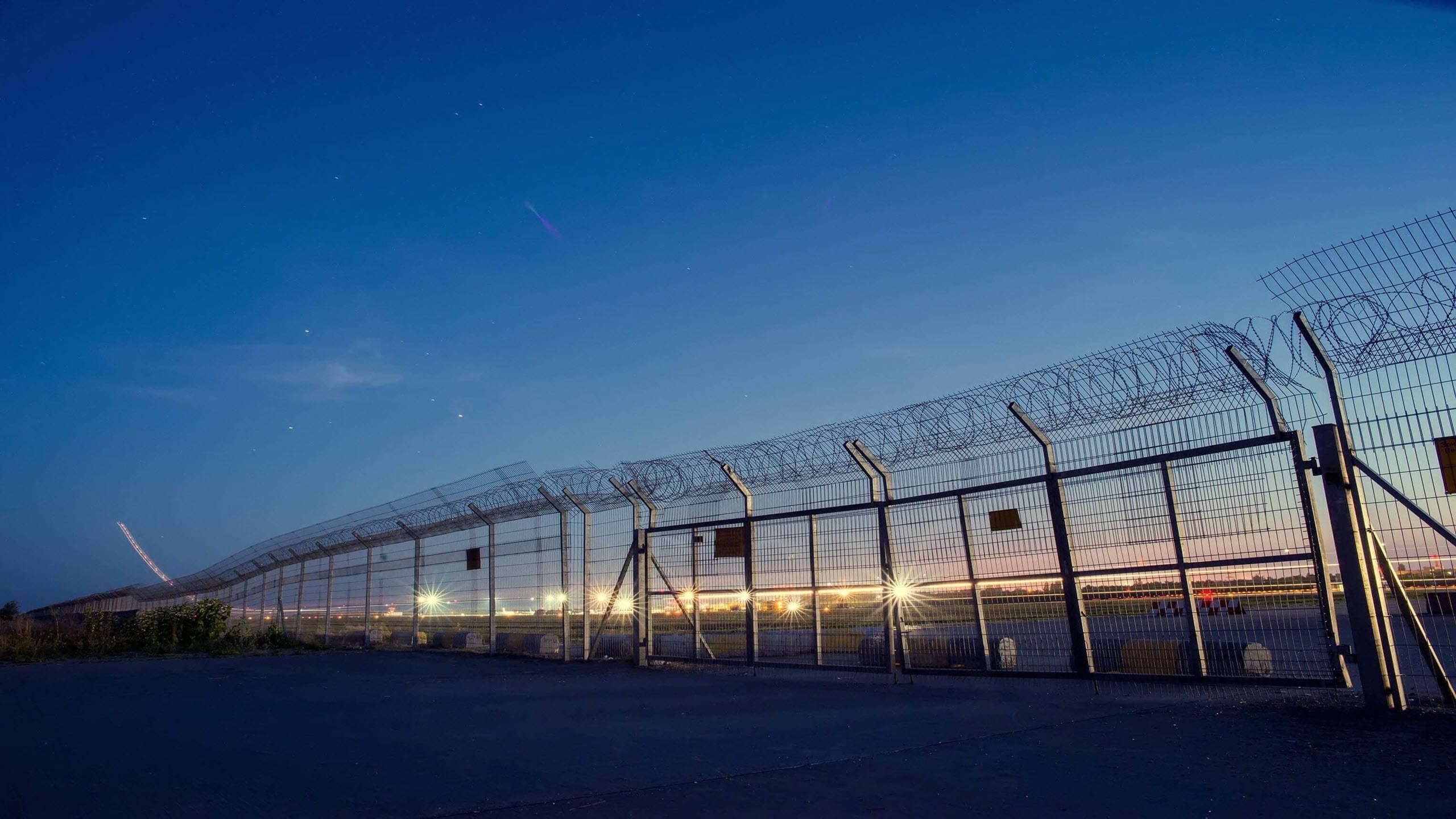
PERIMETER / PHYSICAL AI
Connect perimeter fiber, physical AI and security operations to observe disturbances around campuses, stations and critical facilities, supporting location, review and coordinated response.
01 / BOUNDARY AWARENESS
Cameras provide images, patrols investigate, and fiber adds vibration evidence along the boundary. Connect time and location to help teams identify changes and prioritise review.
Choose installation for the fence, wall and terrain, mapping the sensing route to security zones.
Extract event features from duration, frequency, spatial extent and background activity.
Correlate video, access and work records to support human review and traceable response.
02 / APPLICATIONS
Match cable installation to fence contact, ground activity and nearby construction to build interpretable observations.
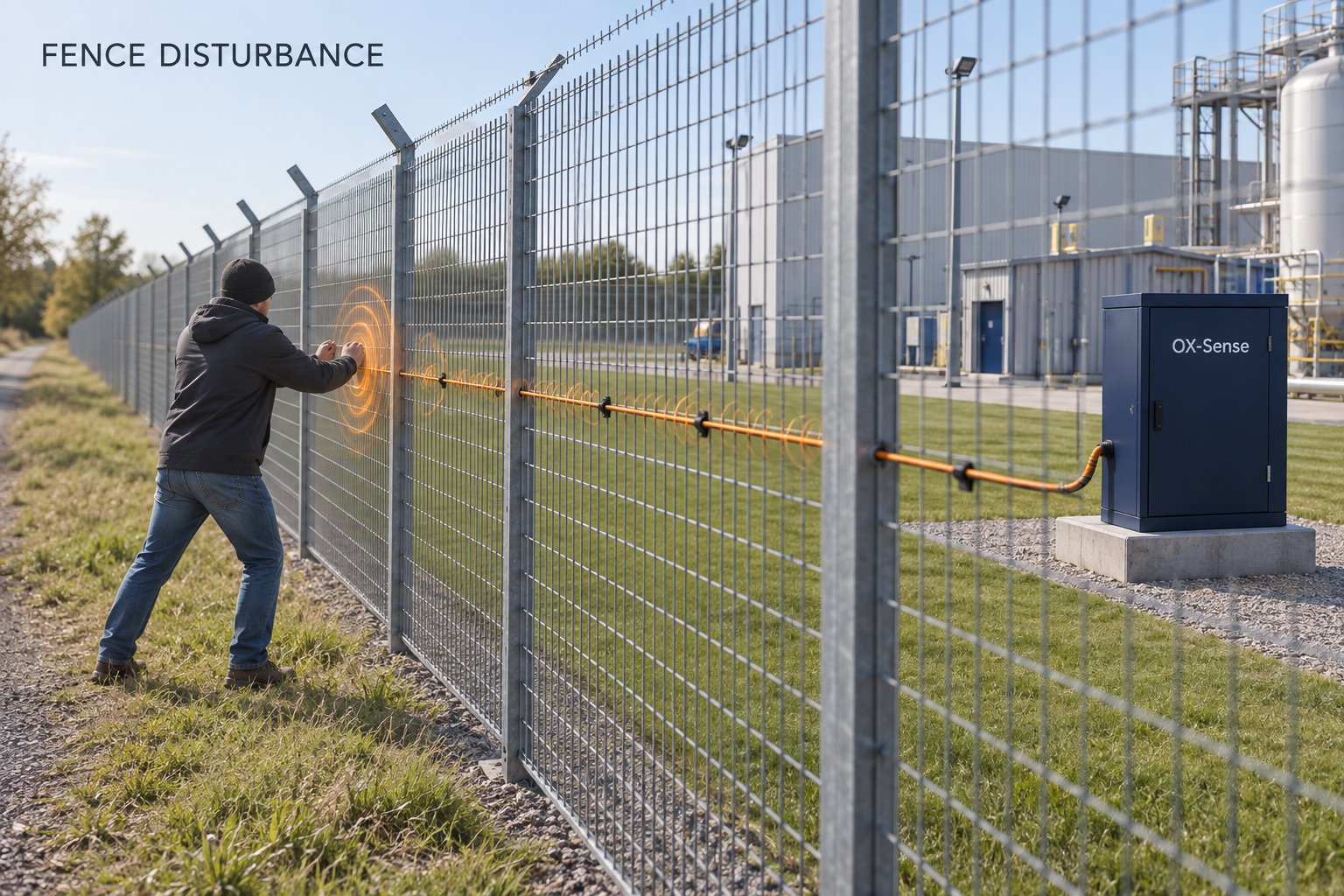
Fence-mounted cable senses mechanically coupled disturbance associated with climbing, cutting or impact. Build a baseline for wind, rain, loose panels and vegetation, then corroborate with video and inspections.
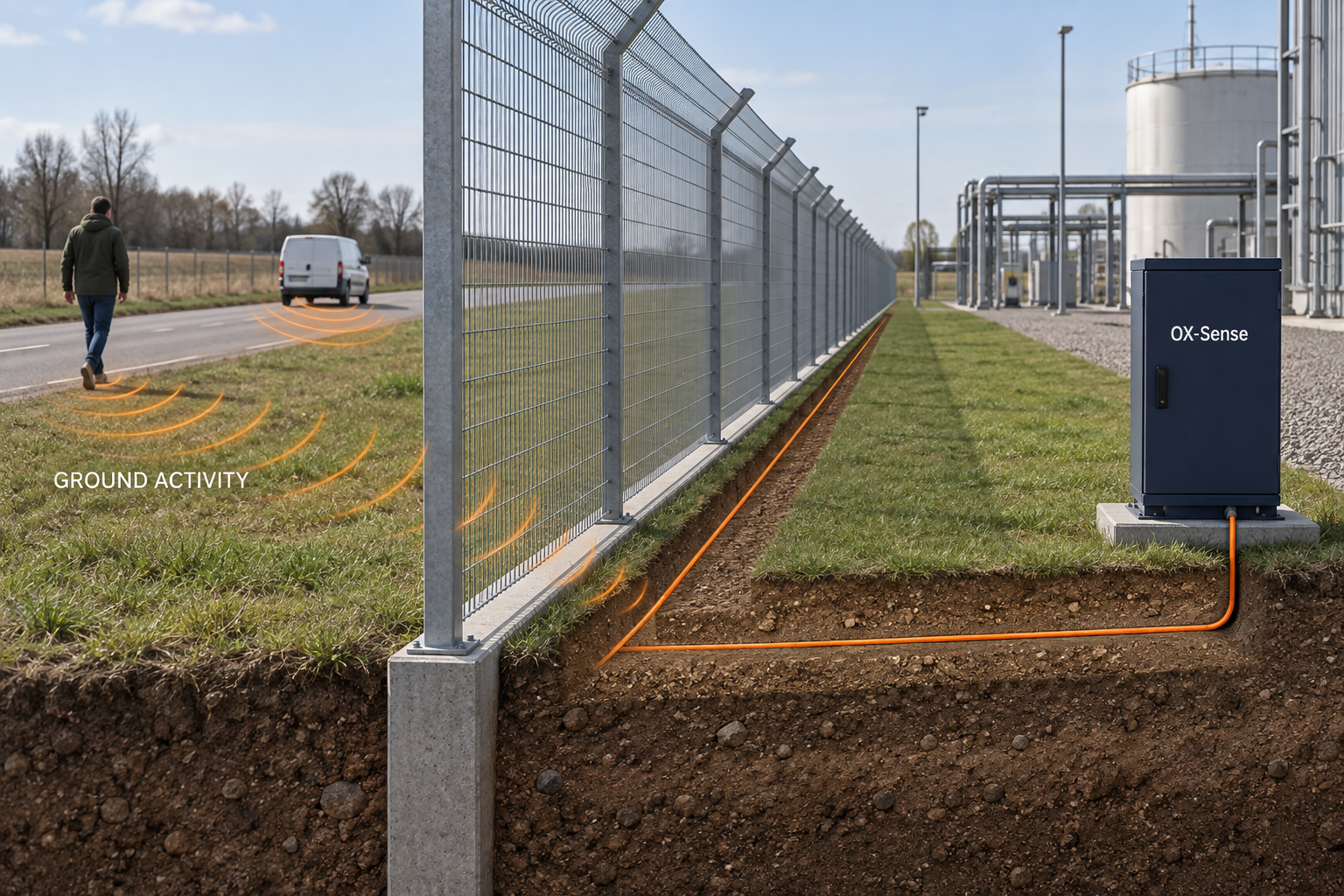
Buried cable observes ground-coupled footsteps and vehicles, supporting analysis of moving signatures and vibration patterns. Coverage and classification depend on soil, pavement, installation and background conditions.

Analyse spatial and temporal signatures of manual digging, machinery and sustained impact. Correlate permits and maintenance schedules to guide field investigation.
OX-Sense scene concepts · Cable highlights, cutaways and vibration effects are illustrative, not measurements or installation drawings. Buried cable is backfilled; installation, coupling and detection coverage require site validation.
03 / SENSING & PHYSICAL AI
Cable coupling turns fence or ground disturbance into a fiber response. Optical physics, vibration propagation and installation constraints inform models that connect signal features with location and context.
Fence-mounted and buried cable follow different propagation paths; assess structure and ground conditions first.
Extract frequency, rhythm, extent and duration to investigate event classes and background activity.
Map fiber distance to zones and camera views, producing traceable evidence for review.
Conceptual workflow · Fiber supplies physical disturbance evidence; identity, authorisation and intent require other information.
04 / COORDINATED RESPONSE
Use fiber evidence to prompt review and other sources to supply context. Coordinate with available site systems and interfaces, retaining the record from notification to investigation.
Associate zones, fiber routes and camera positions to support review of the relevant area.
Use authorised access, patrol and construction records to assess activity against site plans.
Record findings, environmental changes and responses to build datasets, validate models and improve the platform.
05 / DEPLOYMENT & VALIDATION
Start with target events and boundary construction to define installation, zoning, integration and acceptance around field evidence.
Assess fence stiffness, attachment, soil and pavement; verify cable and sensing equipment compatibility.
Cover wind, rain, vegetation, animals, routine vehicles and maintenance across different zones.
Use controlled trials to assess missed detections, false alarms, location and review time, including cable and communication fault indications.
OX-SENSE / FEEL THE WORLD
Discuss boundary construction, environment, fiber resources and integration needs to define a validation plan.
Discuss perimeter protection